
Keywords: Anti-Gravity Treadmill, cadence, running
Background
Running cadence or pace is typically measured in running gait analysis and controlled during gait retraining. Lower body positive pressure treadmills or Anti-Gravity Treadmills allow users to walk/run in a reduced-gravity environment.
Objective
The primary objective of this study was to determine how running on an Anti-Gravity Treadmill affects natural running cadence compared to running on a standard treadmill in healthy, active individuals . The secondary objective was to determine whether natural cadence and increased cadence are influenced by body weight support.
Learning planning
cross-sectional study (convenient sample).
Method
Recruited 30 participants who ran on an Anti-Gravity Treadmill at a pre-determined, self-selected, and comfortable treadmill speed. Cadence was recorded under nine random weight conditions, ranging from 100% to 20% of body weight in 10% increments. An additional 9 participants were recruited to replicate their natural standard treadmill cadence on the same Anti-Gravity Treadmill under the same random weight conditions, with the cadence increased by 5% and 10%.
<<Result,
30 participants (19 women and 11 men), with a mean age of 27.3 years (range 22–45 years), completed Part 1 of the study protocol, while another 9 participants (2 women and 7 men), with a mean age of 29.6 years (range 22–45 years), completed Part 2 of the protocol (range 25–40 years). Natural running cadence had a significant effect on the Anti-Gravity Treadmill with a percentage reduction in body weight (p<.01 post-hoc="" t-tests="" showed="" that="" each="" body="" weight="" interval="" was="" significantly="" lower="" than="" the="" previous="" on="" anti-gravity="" treadmill="" with="" a="" cadence="" decrease="" ranging="" from="" to="" between="" intervals.="" seven="" of="" nine="" participants="" in="" part="" were="" able="" replicate="" and="" improve="" their="" at="" all="" levels="">
Conclusion
When performed at a self-selected moderate-intensity pace, reducing body weight on an Anti-Gravity Treadmill resulted in a significant and linear decrease in running cadence. Furthermore, the vast majority of participants were able to successfully replicate and increase their cadence at each body weight percentage level.
文章引用于:Josie Stockland, PT, DPT,1M. Russell Giveans, PhD,1 and Peter Ames, PT, PhD1
Article link: THE EFFECT OF AN ANTI-GRAVITY TREADMILL ON RUNNING CADENCE
Running, a recreational sport, is associated with a high risk of overuse injuries. Lower limb injuries are reported to occur in 18% to 94% of cases, with knee-related injuries accounting for the largest proportion. During injury recovery and when running endurance may be reduced, runners often utilize cross-training methods, such as elliptical training or pool-related activities, to supplement or substitute for the aerobic benefits of running. Running gait analysis typically assesses running speed or tempo. Previous research supports altering running dynamics and kinematics by controlling speed through increased cadence. Heidscheiter et al. showed that increasing cadence by 5% compared to the natural running tempo can reduce load on the hip and knee joints, which may be associated with injury prevention and treatment of overuse injuries. Allen et al. found that a cadence 10% higher than the natural tempo can effectively shift running patterns that initially use heel strike to a non-heel strike or less severe heel strike pattern, thereby altering ground reaction forces.
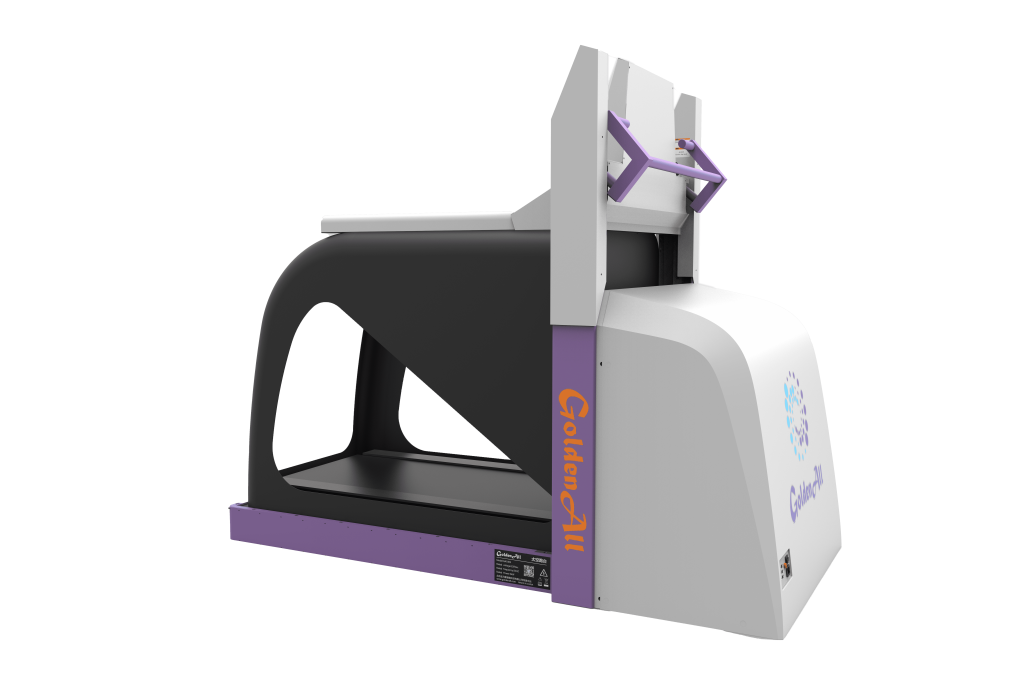
Anti-Gravity Treadmills allow users to walk or run in a weight-bearing environment. Users walk or run on a treadmill belt surrounded by a closed, inflatable chamber. As air pressure increases, the upward force reduces the runner’s weight and decreases the percentage of body weight experienced upon foot impact (BW%). Anti-Gravity Treadmills offer a mode of aerobic exercise with reduced ground reaction forces and are used in rehabilitation communities as well as among healthy individuals. Differences in exercise levels and running mechanics between standard treadmills and Anti-Gravity Treadmills have been documented. Figueroa et al. determined that, in healthy subjects, running on a weight-supported Anti-Gravity Treadmill incurred lower metabolic costs compared to a standard treadmill. Kline et al.Published results on metabolic shifts between standard treadmill speeds and Anti-Gravity Treadmills at 50% to 100% body weight support.
Two studies investigated the effects of Anti-Gravity Treadmills on running cadence. Raffalt et al. Measured stride length and cadence on an Anti-Gravity Treadmill in elite or sub-elite male runners at five standardized speeds and four BW% conditions. In all speed intervals, cadence and stride length decreased with increasing body weight support. Neil et al. Investigated lower body kinematics in healthy male runners at three conditions equivalent to 60%, 70%, and 80% of peak VO2 capacity. On an Anti-Gravity Treadmill, ankle and knee kinematics were significantly altered during the standing phase compared to a standard treadmill, and standing time was significantly shortened when body weight was below 80%. Spatiotemporal data collection in the aforementioned studies was accomplished using in-shoe plantar pressure sensors. To the authors’ knowledge, no previous studies have investigated the effects of Anti-Gravity Treadmills on non-runner groups or allowing participants to use self-selected pacing.
The Anti-Gravity Treadmill affects natural running cadence compared to a standardtreadmill in healthy, active individuals . A secondary objective was to determinewhether natural cadence and increases in cadence are influenced by body weightsupport. The authors hypothesized that: a) natural cadence on an Anti-GravityTreadmill is lower than on a standard treadmill; b) natural cadence on anAnti-Gravity Treadmill decreases with increasing body weight support; and c)cadence on the ground will be maintained at 50% of body weight, after which itbecomes impractical, and a 10% increase in pace will be maintained up to 60% ofbody weight.
For convenience, this study was conducted at a private outpatient physical therapy clinic. Participants were recruited through word-of-mouth referrals from colleagues within the same facility. Inclusion criteria included being between 18 and 49 years of age, and being self-reportedly physically active (engaging in more than 150 minutes of moderate-intensity exercise per week, resulting in sweating or shortness of breath, for 30 minutes or more consecutively per week). Participants were also novice runners, running less than 15 miles per week. Participants were excluded if they had suffered a lower limb injury within the past three months, had a history of lower limb surgery, currently experience back or lower limb pain while running, have cardiovascular or neurological impairment, or were unable to provide voluntary consent.
<Part 1: Participants warmed up for five minutes on a standard treadmill; they were ignored regarding speed and instructed to increase the belt speed to a “moderate pace that would allow them to run three miles or five kilometers.” After the warm-up, the treadmill speed was recorded, and researchers visually counted the number of foot contacts (while the participants were running on the treadmill) over thirty seconds, measuring each participant’s natural running pace and recording it as “steps per minute.” Next, participants moved to an Anti-Gravity Treadmill (Fremont, California) and set it to a speed of their choice. After a 60-second familiarization period of running at 100% body weight, participants ran at nine random weight intervals of 60 seconds each, ranging from 100% to 20% of body weight in 10% increments. The tempo of the last thirty seconds of each cycle was recorded. Part 2: Participants’ chosen pace and natural running tempo were determined on a standard treadmill in the same manner as above. Using a cell phone metronome, participants performed sixty seconds of pace at audible cues of 100%, 105%, and 110% of their natural tempo. Participants then entered an Anti-Gravity Treadmill and ran under the nine randomized BW% conditions described above. For each interval, participants again attempted to maintain a natural (100%) pace, increasing it by 5% and then 10% based on metronome cues. If a participant was unable to maintain a natural pace within a given BW% interval, the attempt to increase the pace condition within that interval was not made; instead, the tester switched the Anti-Gravity Treadmill to the next randomized weight condition. Similarly, if increasing the pace by 5% was unsuccessful, an attempt to increase it by 10% was not made. All participants provided informed consent, and the study was approved by the University of Minnesota Institutional Review Board. Repeated measures ANOVA and post-hoc t-tests were used to statistically determine differences between weight trials. Statistical analysis was performed using IBM SPSS Statistics for Windows v23 (IBM Corp., Armonk, NY). Significance was set at p
<Part 1:consisted of 30 participants (19 women and 11 men), with a mean age of 27.3 years (range 22–45 years), and Part 2 consisted of 9 participants (2 women and 7 men), with a mean age of 29.6 years (range 25–40 years). For Part 1, repeated measures ANOVA showed that, with a decrease in body weight percentage, natural running cadence had a significant effect on the Anti-Gravity Treadmill (p Anti-Gravity Treadmill , each 10% body weight interval was significantly lower than the previous 10% interval.
The results in Part 1 indicate that the natural cadence at any reduced BW% on an Anti-Gravity Treadmill will be lower than the natural cadence at a self-selected 5 km pace on a standard treadmill. This is consistent with previous findings from studies conducted at a set pace. While the cadence data points varied significantly between each BW% level, the values between the intervals ranged from 1.5% to 3.5%, which may not be clinically relevant to previous literature. Significant changes in muscle activation were observed, with the smallest cadence change being 5%. However, the expectation that cadence will decrease by 10% at 50% body weight and by 20% at 20% body weight may be helpful to clinicians. Standard treadmill cadence was prospectively estimated based on Anti-Gravity Treadmill performance. Furthermore, these findings can help clinicians select ideal levels of weight support to minimize changes in running cadence and provide weight support for runners aiming to maintain a set pace, thereby minimizing the natural decline in cadence. It is worth noting that this study was conducted in healthy individuals; if replicated in injured populations, it may be necessary to determine the natural cadence trends in antigravity training for specific rehabilitation populations. 77.8% of participants successfully controlled their pace at a natural standard treadmill running tempo, as well as at 5% and 10% increments. Two participants failed to complete all tempo conditions. One participant failed during the early randomized BW% level but succeeded in every condition at all other BW% intervals, suggesting a delayed learning effect from the Anti-Gravity Treadmill environment or matching metronome cues. For the second participant, all failed attempts occurred at the end of the data collection, likely due to potential fatigue effects on that particular participant.
The results in Part 2 provide evidence that, in healthy, active individuals, cadence can be reproduced on an Anti-Gravity Treadmill at a natural pace with up to a 10% increase in pace, regardless of percentage of body weight at the time of running. The authors are currently unaware of any previously reported literature confirming or refuting these findings. This information may be beneficial for runners using Anti-Gravity Treadmills as a training method and attempting to control their cadence. These results indicate that, at any body weight level, cadence on an Anti-Gravity Treadmill is expected to be lower than ground cadence. Compared to natural cadence on a standard treadmill, cadence is reduced by 10% at 50% body weight and by 20% at 20% body weight. These values may help clinicians form expectations for ground running cadence based on Anti-Gravity Treadmill performance. Furthermore, this study lays the foundation for future investigations of injured runners who may benefit from gait retraining in the early stages of their rehabilitation. Anti-Gravity Treadmills offer the potential to initiate tempo retraining early, promoting neuromuscular adaptation before injured athletes return to ground running. Using Anti-Gravity Treadmills as a method to estimate the ground running cadence of injured runners training on them at their current functional level could also be ideal. Understanding the expected decrease in cadence that naturally occurs with increased weight support allows clinicians to measure a patient’s progress toward a natural cadence based on the level of weight support being used. This study has several limitations. First, it was conducted on healthy individuals, and it’s possible that different Anti-Gravity Treadmill cadence trends would be achieved if replicated on injured individuals. Second, allowing novice runners to choose their own speeds could alter their ability to control cadence, as faster speeds might place greater demands on running mechanics and the overall cardiovascular system. Another limitation of this study is that data collection may be prone to errors due to researchers visually counting steps, compared to the objective data collected using pressure sensors in previous studies. However, the results of this current study, along with past research, support visual cadence tracking as a convenient alternative to more expensive methods.
An Anti-Gravity Treadmill at a self-selected moderate-intensity pace produces asignificant and linear decrease in cadence. On an Anti-Gravity Treadmill, the naturalrunning cadence decreases significantly for every 10% reduction in body weight.Furthermore, the vast majority of healthy individuals are able to maintain andincrease their natural cadence at different percentages of body weight, supportingthe possibility of cadence training before injured individuals begin full-body weightrunning. Appropriate cadence manipulation candidates may benefit from initiatingcadence retraining earlier, and this is possible in the weight-reducing environmentprovided by an Anti-Gravity Treadmill.